显示标签为“dye sublimation printing”的博文。显示所有博文

2016年11月10日星期四

Does Sublimation Ink Works On Cotton ?

Does Sublimation Ink Works On Cotton ?

dye sublimation ink

Many people want to find sublimation ink for cotton fabric.
Sublimation ink is a special ink and it will NOT work on cotton and just barely work with 65/35 blend. It requires 100% polyester in white or some pastels.
dye sublimation ink

 Reason is the ink on special paper is turned into a gas by the heat and the pressure forces the gas into the garment where it bonds with the polyester fiber.
If you hope the image of sublimation paper can be transfer on fabric, you have to make sure your polyester fabric content. It have to up to 60%.

Follow us:

2016年10月27日星期四

What Fabrics can Dye Sublimation Ink Print On?

What Fabrics can Dye Sublimation Ink Print On?

dye sublimation printing

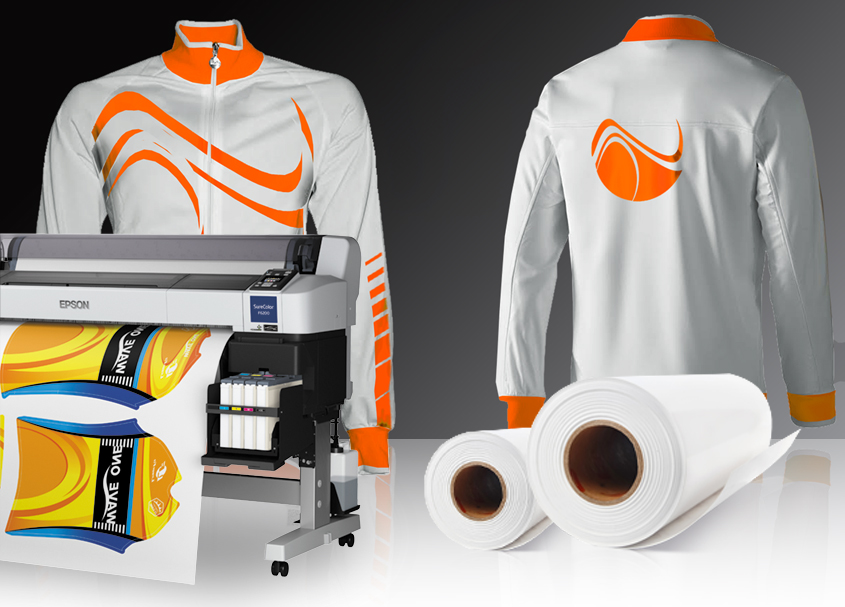
Dye sublimation printing allows images to be printed on a variety of man-made textiles. What this means is that a range of durable materials are now possible to use to be turned into vibrant printed displays and bear colourful images.
Those materials include synthetic textiles such as polyester, spandex, lycra or blended textiles. Through the unique dye sublimation printing method, which sees dyes heated and applied to the target surface as a vapour. These vapours then settle into the material and turn into a liquid – resulting in an extremely high quality print.
Dye sublimation ink printing opens up a variety of material types to carry beautiful soft printed images. The process excels at printing for garments, table cloths, backdrops, banners, curtains and other usual textile materials.
dye sublimation printing

It’s not hard to think of how useful these synthetic surfaces can be as canvases for printed images. They make great promotional items such as t-shirts and dresses. Polyester media can be turned into a variety of stunning displays, such as:
A wall-mounted or upright pop-up banner, or banners meant to be used as sails, car covers and even tents
Flags adorned with a company logo, country’s colours or even a design of your own
Household items such as window blinds, curtains, table cloths, chair covers, even light shades and napkins
Special purpose clothing such as sports jerseys and event promotional t-shirts
Coverings for tables, and table skirts
Tension and pop-up fabric displays for promotional use at conference or special meetings
Hanging fabric structures for big events such as trade shows where you want to stand out in a crowd

Follow us:

2016年10月12日星期三

Sublimation: Attributes and Printing Process

Sublimation: Attributes and Printing Process

sublimation printing process


Benefits of Sublimation

Dye sublimation is a process of printing on fabric (and other substances) that provides the best quality and most durable printing option.
In sublimation, the inks are fused into the fabric as opposed to sitting on top of the fabric such as in inkjet or screen printing.
The process not only gives fabrics a softer touch after the printing, but it is also very durable. The color remains strong in outdoor lighting and after extensive washing so it’s the ideal process for sportswear,  school and corporate clothing.
sublimation printing process

Sublimation Printing Process

Pattern Design: The graphics being applied to the garment are usually in AI or EPS format. Our graphic designer then creates a mock-up before moving to the sample making step. A mock-up is a flat view of the artwork and it shows our client the placement of their graphics and how the garment will be sewn together.

Sample Making: The first patterns are sent to the sewing unit for assembling. This is usually stitched on calico or muslin which is an inferior quality of fabric and it reduces cost. The sample is constructed to analyze the pattern fit and design. After the sample garment is stitched it is reviewed by our panel of designers, pattern makers and sewing specialists. If any changes have to be made they are made at this time.


Production Pattern: The pattern production will be used for the mass production. The production pattern is developed by calculating and taking into account the following measurements:

the direct sample
specification sheet/measurement chart
ease allowance- minimum amount of room in your clothing that you feel comfortable with for normal body movements;  the sewing industry basically accepts wearing ease to be 2 1/2″ (6.4cm) at the bust area, 1″ (2.5cm) at the waist and 3″ (7.6cm) at the hip area.
sewing allowance- the distance between the seam line where you stitch to join two or more pieces of fabric and the cut edge of the fabric; standard seam allowance is 1.5cm
These allowances are different for different types of fabrics and patterns
Grading: The purpose of grading is to create patterns in different sizes. Grading a pattern is really scaling a pattern up or down in order to adjust it for multiple sizes.

Marker Making: The measuring department determines the fabric yardage needed for each style and size of garment. Computer software helps the technicians create the optimum fabric layout in order for the fabric to be used efficiently.  Markers are placed to ensure that fabric doesn’t get wasted during cutting operation.

Spreading: With the help of spreading machines, fabric is stacked on one another in reaches or lays that may go over 100ft (30.5m) long and hundreds of plies (fabric pieces) thick.

Cutting: The fabric is then cut with the help of cloth cutting machines suitable for the type of cloth being used.

Sorting/Bundling: The sorter sorts the patterns according to size and design and makes bundles of them. This step requires much precision because making bundles of mismatched patterns can create severe problems. On each bundle there are specifications of the style, size and marker.

Sewing/Assembling: The sorted bundles of fabrics are now ready to be stitched. There are sewing stations used for sewing different parts of the cut pieces.

Inspection: Open seams, wrong stitching techniques, non-matching threads, missing stitches, improper creasing of the garment, erroneous thread tension and raw edges are some of the sewing defects which can affect the garment quality. During inspection, the quality control unit checks each prepared article of the garment for these defects.

Pressing/Finishing: Molding (pressing, pleating, and creasing) may be done to change the finished surface of the garment by applying pressure, heat, moisture or a combination of the three.


Contact us:
-------Email: sales@ink-sublimation.com
-------Skype: li.sunny282
-------Whatsapp: 008613776614520
-------Website: www.ink-sublimation.com

Follow us:

2016年9月29日星期四

The Facts About Dye Sublimation Printing

The Facts About Dye Sublimation Printing

dye sublimation printing


The sublimation method will be the modern strategy, so invented from each of the other tactics like thermal printing invented in 1970s.

There's no barrier in varieties and difficulties with the drawings and emblem printing from the uniforms and sportswear. The method assists in infusing the print around the respective fabric.

As there are numerous positive aspects and countable characteristics, the strategy is high-priced which adds a downside for the strategy.
dye sublimation printing

In market, one can very easily discover suppliers, who're extremely appreciated within the neighborhood as well as global market for providing expert Sublimation Sportswear and Sublimation School Clothing. The experience with the suppliers aids in the making the supply of custom-made Sublimated Clothes in specifications offered from the potential purchasers and at the market major rates. The producers must install each of the progress amenities in their infrastructural premises in order to lessen the additional expenses. Some also incorporate units like warehousing and packing to avoid any other extra expenses for the complete cost being invested.

Contact us:
-------Email: sales@ink-sublimation.com
-------Skype: li.sunny282
-------Whatsapp: 008613776614520
-------Website: www.ink-sublimation.com

Follow us:

What Fabrics can Dye Sublimation Ink Print On?

What Fabrics can Dye Sublimation Ink Print On?

dye sublimation printing

Dye sublimation printing allows images to be printed on a variety of man-made textiles. What this means is that a range of durable materials are now possible to use to be turned into vibrant printed displays and bear colourful images.
Those materials include synthetic textiles such as polyester, spandex, lycra or blended textiles. Through the unique dye sublimation printing method, which sees dyes heated and applied to the target surface as a vapour. These vapours then settle into the material and turn into a liquid – resulting in an extremely high quality print.
dye sublimation ink

Dye sublimation ink printing opens up a variety of material types to carry beautiful soft printed images. The process excels at printing for garments, table cloths, backdrops, banners, curtains and other usual textile materials.
It’s not hard to think of how useful these synthetic surfaces can be as canvases for printed images. They make great promotional items such as t-shirts and dresses. Polyester media can be turned into a variety of stunning displays, such as:
A wall-mounted or upright pop-up banner, or banners meant to be used as sails, car covers and even tents
Flags adorned with a company logo, country’s colours or even a design of your own
Household items such as window blinds, curtains, table cloths, chair covers, even light shades and napkins
Special purpose clothing such as sports jerseys and event promotional t-shirts
Coverings for tables, and table skirts
Tension and pop-up fabric displays for promotional use at conference or special meetings
Hanging fabric structures for big events such as trade shows where you want to stand out in a crowd

Contact us:
-------Email: sales@ink-sublimation.com
-------Skype: li.sunny282
-------Whatsapp: 008613776614520
-------Website: www.ink-sublimation.com


Follow us: